Mehndi — a guide for the family.
What happens on a Mehndi morning, who needs to be where, and how a photographer can sit alongside the family without getting in the henna.
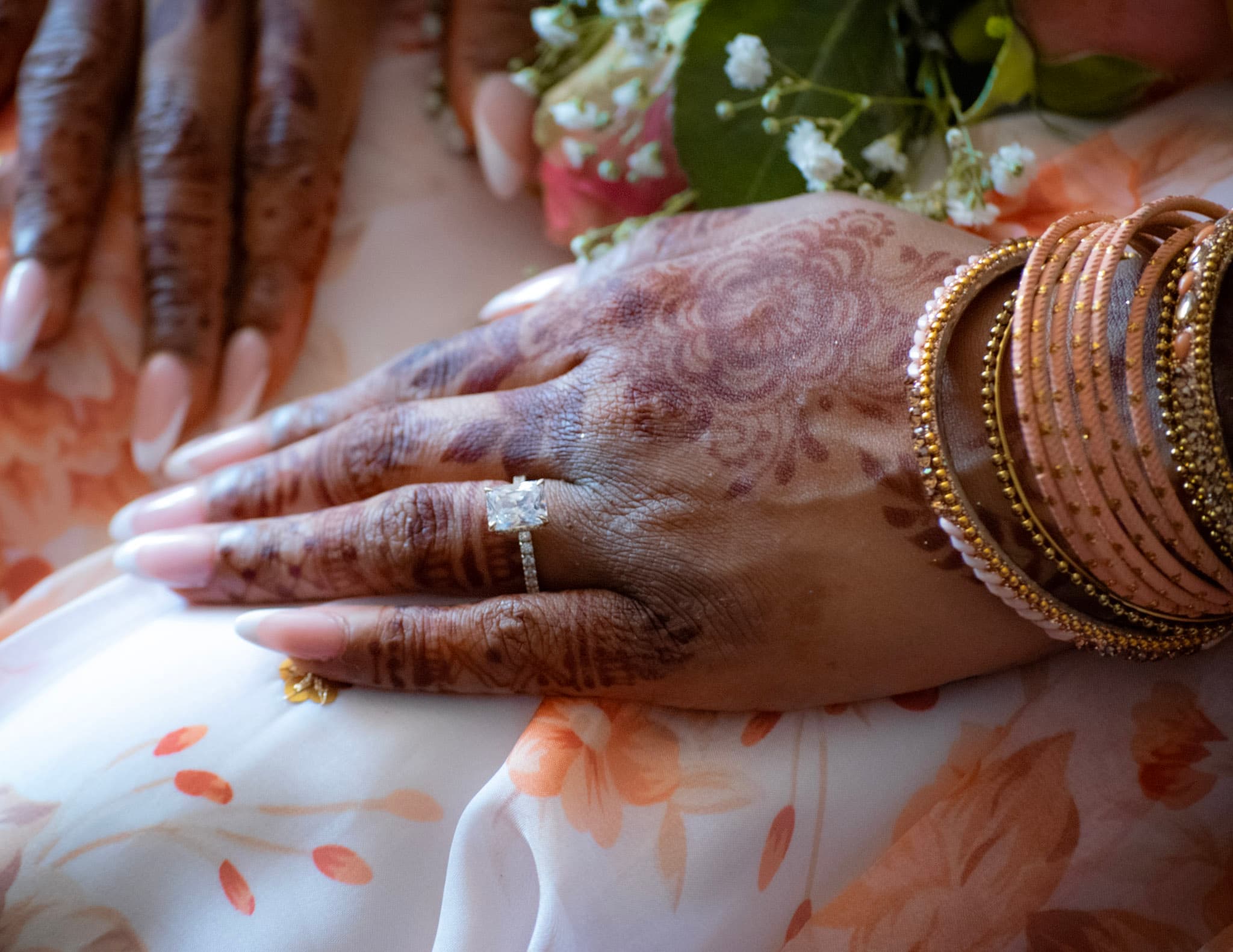
A Mehndi is the long morning, two or three days before a Hindu wedding day, when the women of the family gather and the bride’s hands and feet are decorated with henna. It is the slowest, warmest ceremony of the week. This is a guide for the family planning one — what happens, who needs to be where, and how the photographer fits around it.
1. What the Mehndi is for.
The Mehndi marks the start of the wedding week proper. The bride sits, the women of both families gather around her, food keeps arriving, and the henna design slowly fills both hands and both feet. The design takes hours by design. It is not a hurried ceremony.
In a lot of Gujarati families, the groom’s name is hidden somewhere in the bride’s henna design. He has to find it on the wedding night. That is a Mehndi tradition almost every family will tell you about, often before the artists have even arrived.
2. The cast in the room.
A Mehndi is a women’s ceremony first. The mother, the sisters, the nani, the masi and the foi sit closest to the bride. The aunties of the groom’s side arrive part-way through and are seated on the bride’s left. Cousins and friends drift in and out, often in waves of three or four, and the bride does her best to look up and greet each one without disturbing the hand the artist is working on.
3. The order of the day.
There is no fixed order to a Mehndi — but the rhythm is the same in almost every family I work with. It runs something like this:
- Artists arrive, set up on a low table on the floor. The bride sits opposite. Tea is offered.
- First pass on the bride’s palms and forearms. Roughly two hours.
- A break — the bride moves to the back of her hands. The room fills up.
- Second pass on hands and the start of the feet. Lunch arrives.
- Cousins and friends start their own designs at a side table. Singing if there is going to be singing.
- Henna is sealed with lemon-and-sugar. Bride sits motionless for the last hour.
The Mehndi has its own pace. The schedule on the printed invite is a polite fiction; the morning lives longer than it says.From the practice
4. How the photographer fits.
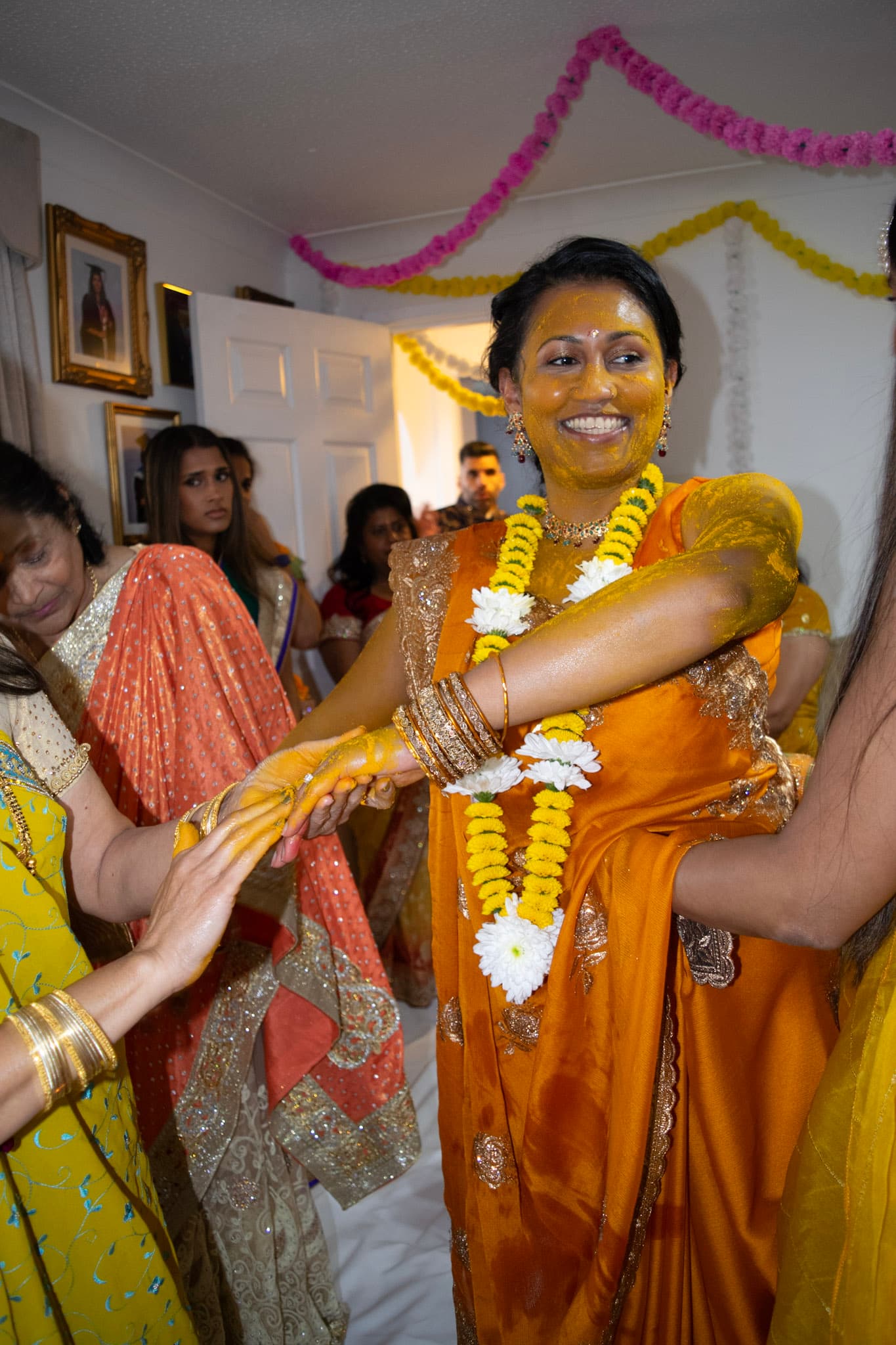
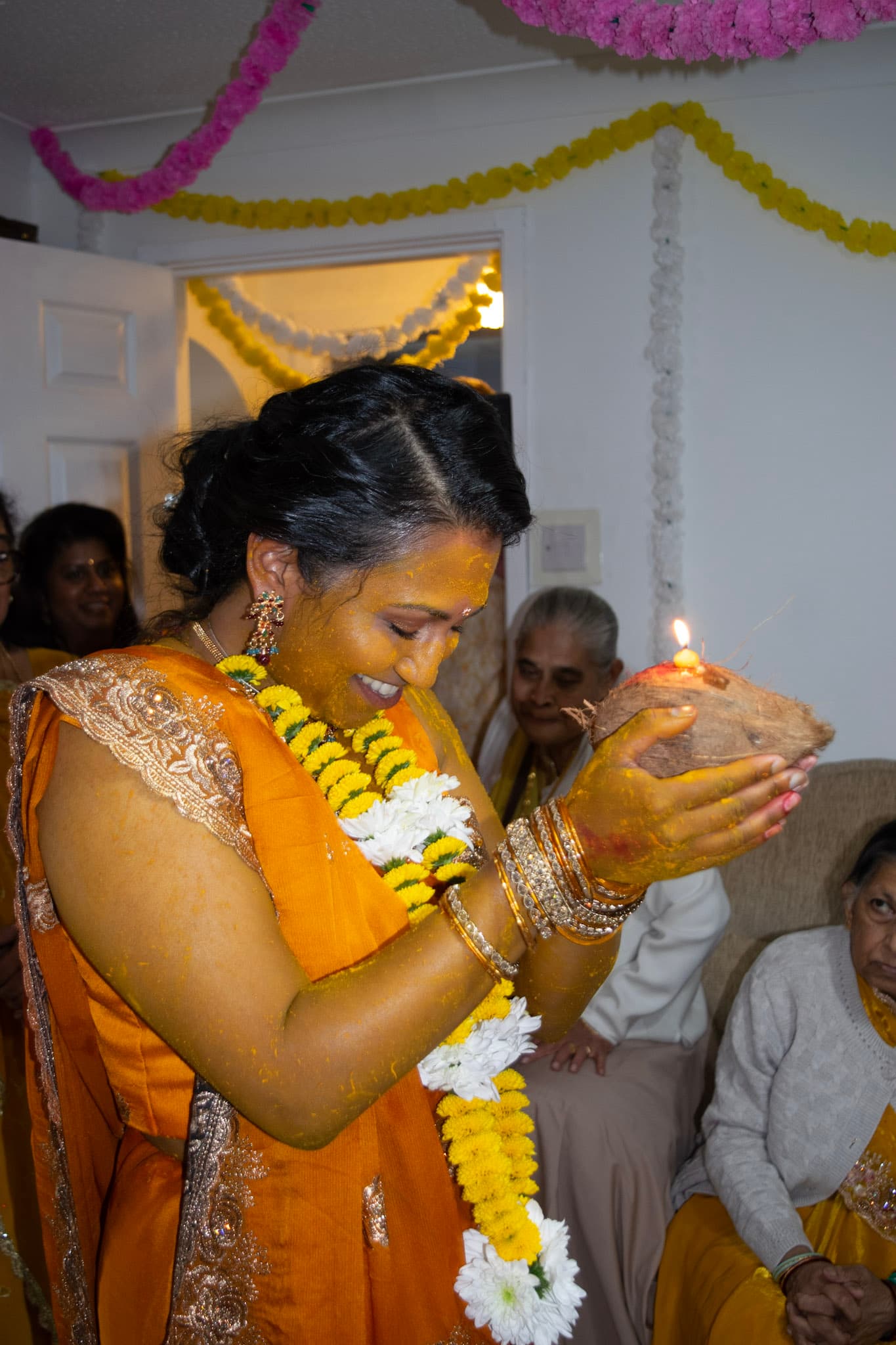
On a Mehndi, the photographer stays small. I arrive forty minutes early, find Mum, find the light, and stay on the floor or a low stool for most of the morning. I shoot without flash. I do not ask anyone to repeat a moment. The most important hour, photographically, is the second hour — when the room has filled up and the bride is in the deepest part of the first pass.
What I do not do
I do not pose anyone. I do not ask the bride to look up. I do not bring lighting. I do not photograph the artist’s tools in close-up unless the artist asks for it. The Mehndi is not a styled shoot. The Mehndi is the morning the family already has — the camera is there because the family wants the morning kept.
5. A note on bookings.
For most weddings I cover, the Mehndi is included as a half-day under the full schedule. If you only want the Mehndi photographed — common when the wedding day itself is being shot by family — that is half-day too. Either way, I ask for the address, a phone number for whoever is hosting the morning, and the artists’ expected start time.
Deepisha
Photographer · Bolton
I cover weddings, sports and family days across Bolton and Greater Manchester. The journal is a personal one — written between shoots, edited on the train. If you would like to read it as it goes out, the subscribe form is at the bottom of the index.
The seven steps — photographing the Saptapadi.
The vows of a Gujarati wedding, told one step at a time. What each step means, where to stand, and how to keep out of the priest's line.
A Mehndi morning in BL3.
A morning at the Patel family's, between cousins arriving and the first sit-down for henna. Four hours, three rooms, one camera.
Walking the moors before first light.
On the personal half of the practice. Why I leave the house at 5am, what I look for, and the cheap pair of boots I will not give up.