The seven steps — photographing the Saptapadi.
The vows of a Gujarati wedding, told one step at a time. What each step means, where to stand, and how to keep out of the priest's line.
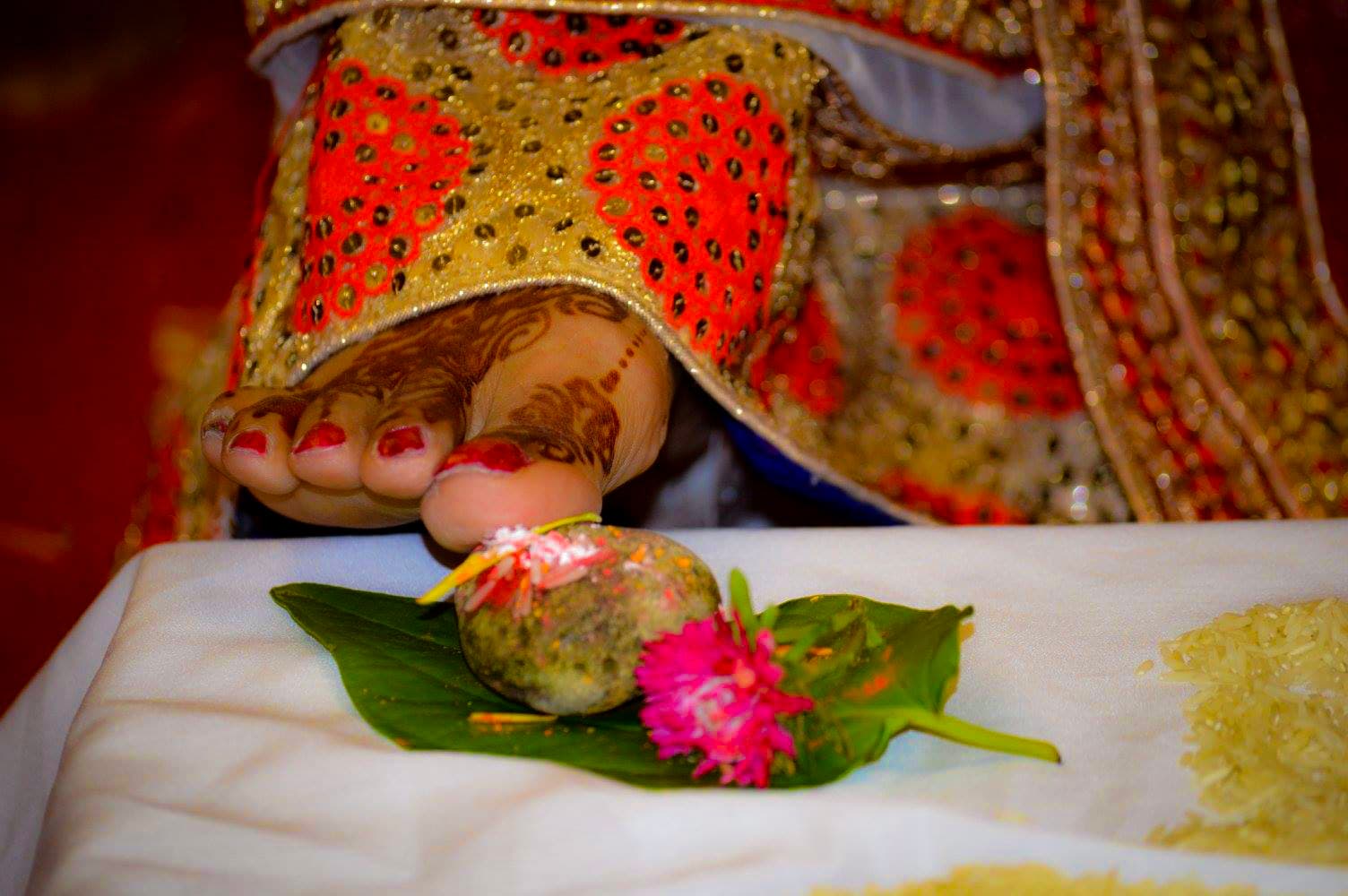
It is 8.47am, the kettle has been going since six, and Sonia’s nani is reaching for the second tin of jalebis. The henna artists are halfway through the bride’s left hand — second pass, the difficult pass — and the room smells of cardamom, sandalwood, and the slightly burnt edge of a samosa nobody is going to admit to. The Mehndi has been going for three hours. There are five more to come.
1. The first hour, before anyone arrives.
I arrive forty minutes ahead of the artists. The plan is always the same — find Mum, find the room with the most light, and find a kettle. The light in the Patel front room comes in flat from a north-facing bay, which is exactly what henna photographs want. Henna does not want a window-pop. It wants the soft sheet of light you would never write home about.
On a Mehndi morning the photographer is the first non-family in the house, which means you do not start with the camera up. You start with the kettle. Two cups of chai later we have a corner of the dining table for the kit, an agreed route in and out of the kitchen, and a name for the auntie who, in eighty minutes, is going to be the centre of the room without anybody telling her.
2. The henna sits, everyone moves.
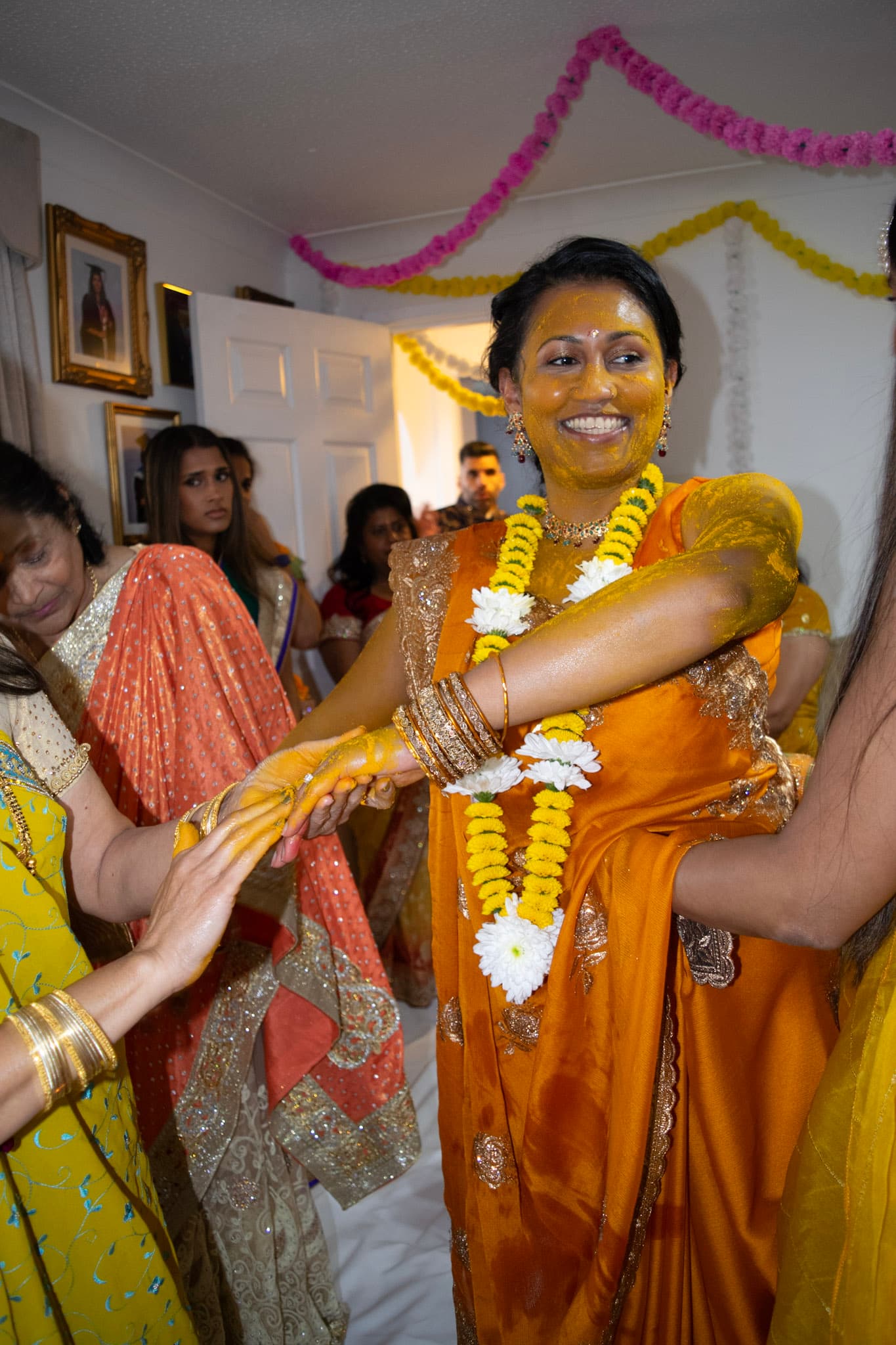
Once the artist starts on the first hand, the bride is going nowhere for ninety minutes. Everyone else, on the other hand, is in continuous motion. Nanis arrive, jalebis arrive, the front door is propped open with somebody’s discarded sandal so cousins can wander in unannounced, and there are at least two grandmothers checking the henna paste against the one they remember from 1974.
This is the hour the camera lives in the room, not at the doorway. I sit on the floor, slightly behind the artist, and I do not move much. The frames I want are at the level of the bride’s elbow, looking up at the face of whoever has just sat next to her — usually an auntie who has not seen her in three months.
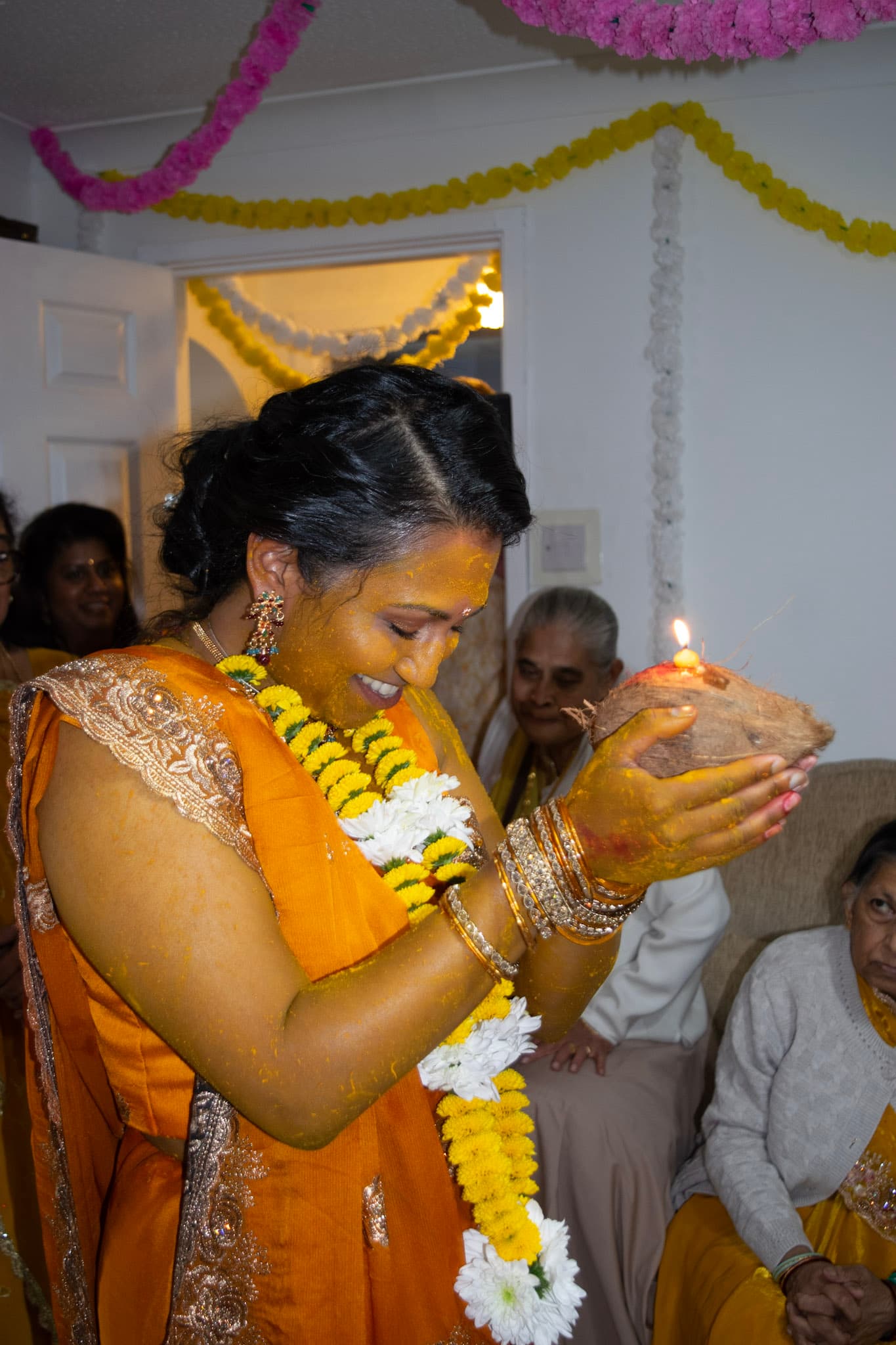
I sit on the floor, slightly behind the artist, and I do not move much. The day asks for stillness.Field notes · Mehndi morning
3. The picture nobody else can take.
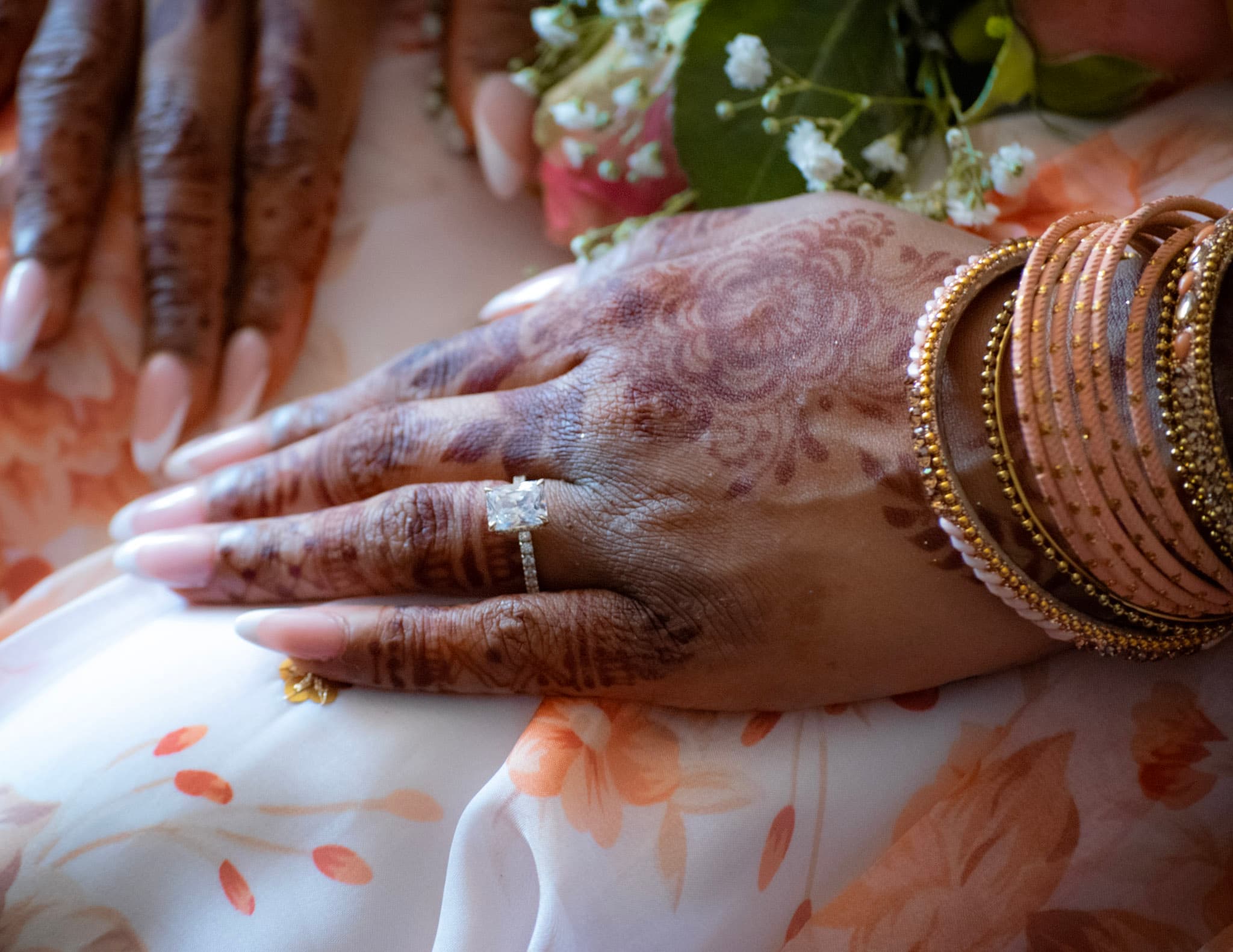
Half the families I work with already have a cousin with a Sony, or an uncle with an iPhone he is rightly proud of. The work the family photographer does that nobody else does is the one quiet frame of the bride looking down at her own hand. Not the smiling-at-camera frame. The one where she is alone in her own head, for two seconds, in a room full of fifty people, and you are far enough away that she does not feel you there.
4. The artists, and the deal with the artists.
Henna artists work hand-to-hand for hours at a stretch. They want a still subject. I want a still subject. Our interests align entirely, and the deal is simple: I do not ask anyone to move, the artist does not ask me to move, and we share the corner of the room without discussion.
I always ask the lead artist if the design has a sequence — some artists begin on the bride’s little finger and work in towards the palm; others start on the palm and work out. The sequence tells you, almost to the minute, which side of the bride is going to be active next.
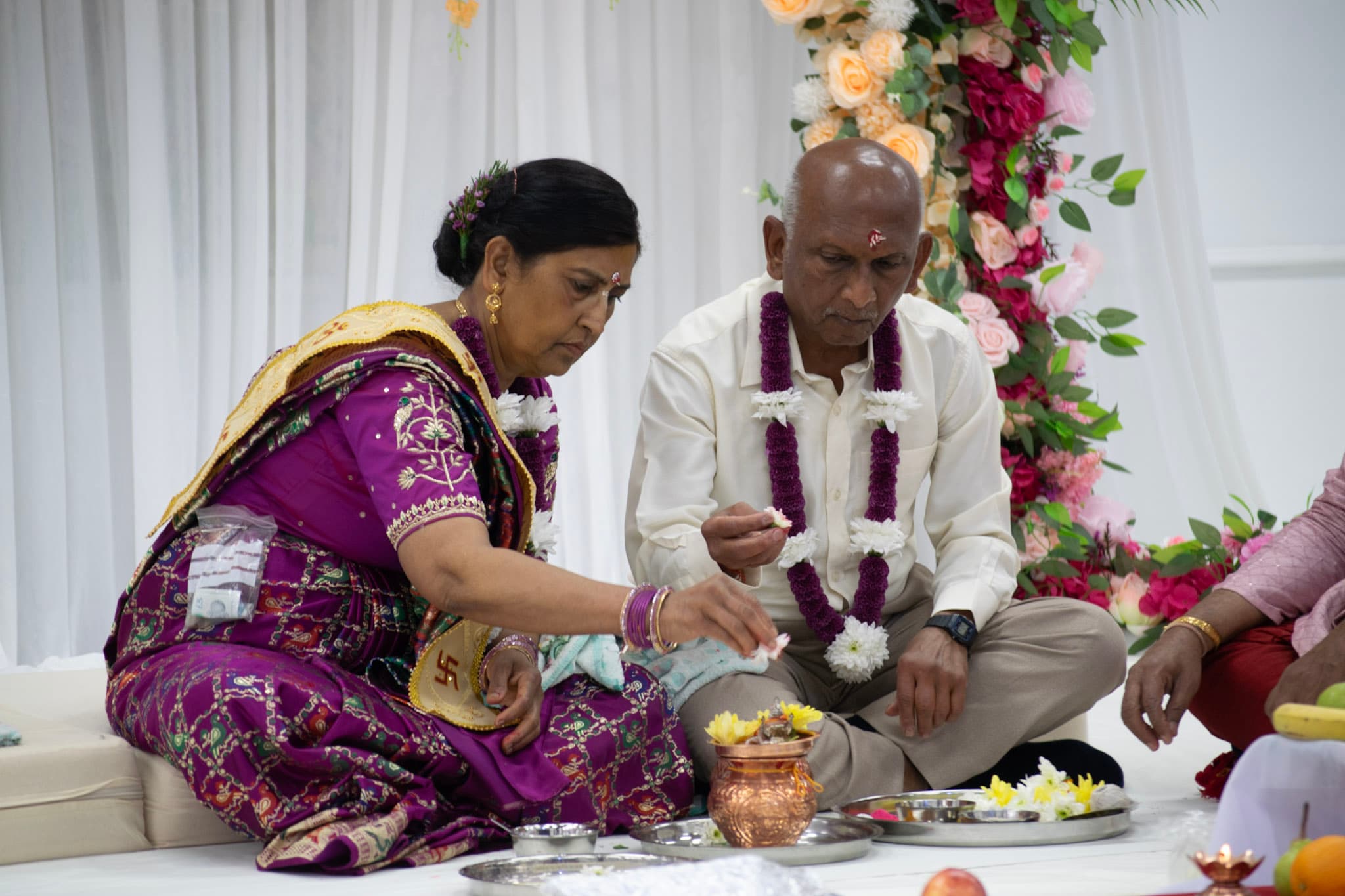
5. The four frames I make sure I leave with.
There are four frames on every Mehndi shot list. Everything else is a bonus.
- The first pass, finished. Both hands held up. The artist’s in frame just enough to give scale.
- The bride looking down at her own hand, alone in the room.
- Mum sitting next to the bride. Both pairs of hands in frame, ideally.
- The wide of the room around the bride — the cousins, the nani, the auntie holding the second tin of jalebis.
A note for the family
If you are reading this because your daughter or your sister is having a Mehndi soon, the only thing I would ask of the family is to plan the food to come twice. Once at 10am for the artists, once at 1pm for the room. The morning lives longer than the printed schedule says, and the henna does not pause for hunger.
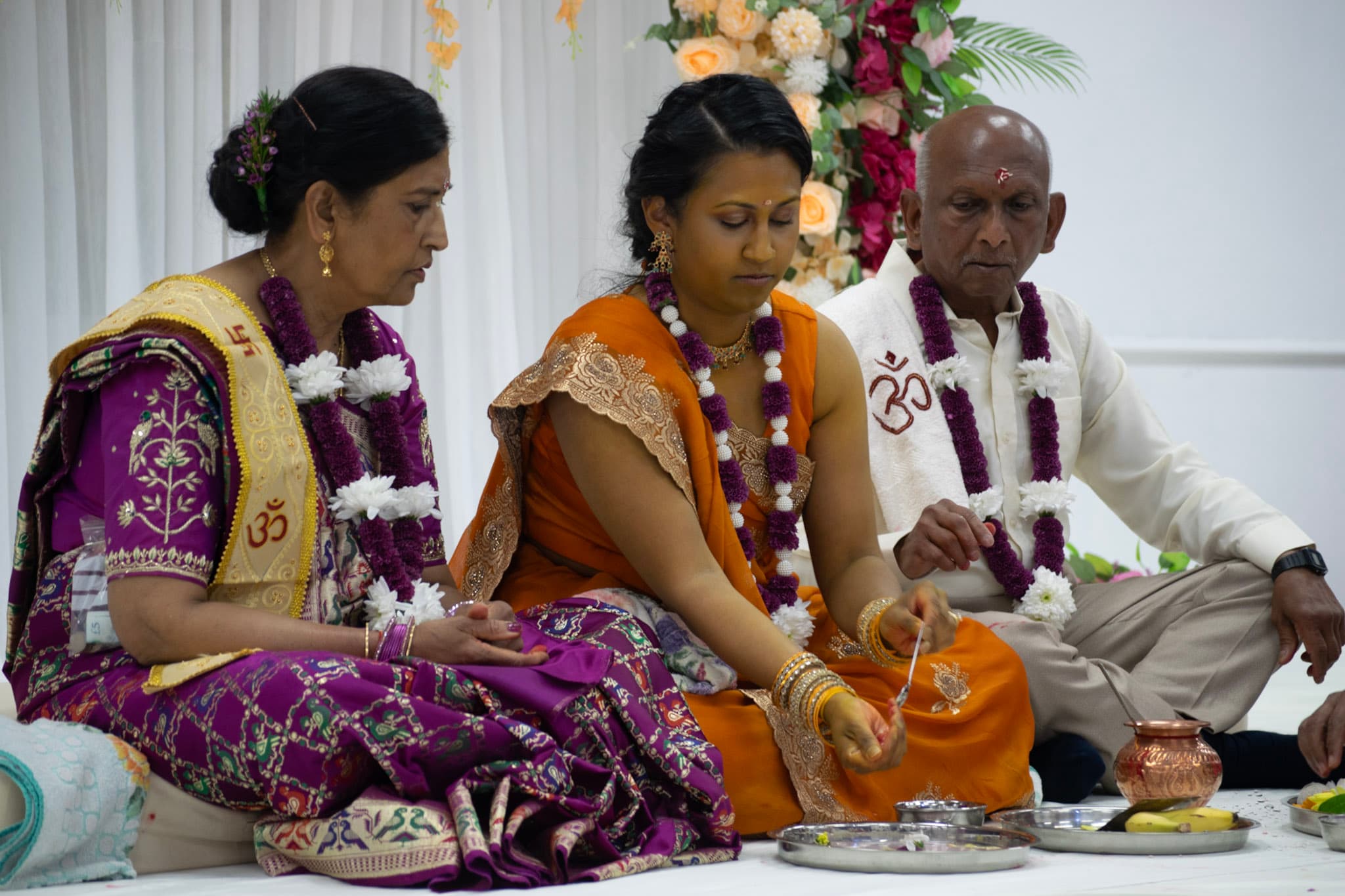
6. Leaving — the henna still wet.
I leave between two-thirty and three. The bride is still seated, the second hand is on its third pass, and there is a small queue of cousins waiting their turn. Mum walks me to the door, hands me a foil parcel of the second batch of jalebis, and reminds me — politely, twice — that the Sangeet is on Friday and to bring extra batteries.
The gallery will land in the family’s inbox three weeks after the wedding day, with the Mehndi morning sitting first. It is the chapter most families dwell on longest. The day is loud, the Mandap is loud, the Vidaai is the loudest quiet of the year — but the Mehndi morning is where everyone’s face is unguarded, and the photographs prove it.
Deepisha
Photographer · Bolton
I cover weddings, sports and family days across Bolton and Greater Manchester. The journal is a personal one — written between shoots, edited on the train. If you would like to read it as it goes out, the subscribe form is at the bottom of the index.
Mehndi — a guide for the family.
What happens on a Mehndi morning, who needs to be where, and how a photographer can sit alongside the family without getting in the henna.
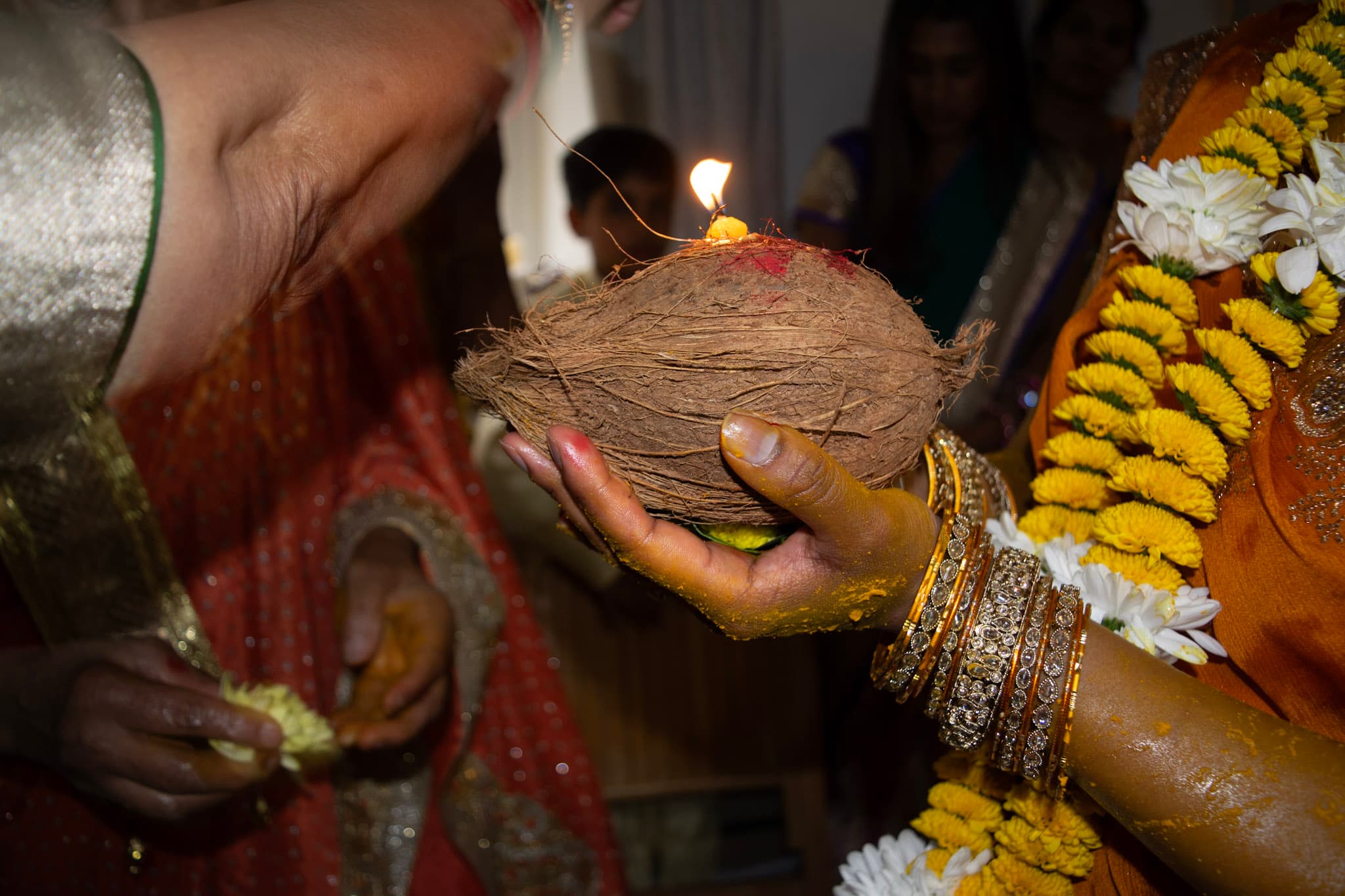
A Mehndi morning in BL3.
A morning at the Patel family's, between cousins arriving and the first sit-down for henna. Four hours, three rooms, one camera.
Walking the moors before first light.
On the personal half of the practice. Why I leave the house at 5am, what I look for, and the cheap pair of boots I will not give up.